A systematic review is a study of studies. Instead of trusting one report, it gathers every credible study on a question and combines them using a transparent, repeatable method. In real estate, where a single headline can sway a decision worth tens of thousands of dollars, that difference matters more than most readers realize. Here is why the most reliable property research rarely comes from one eye-catching study, and how to recognize the stronger kind.
Why one study is never enough
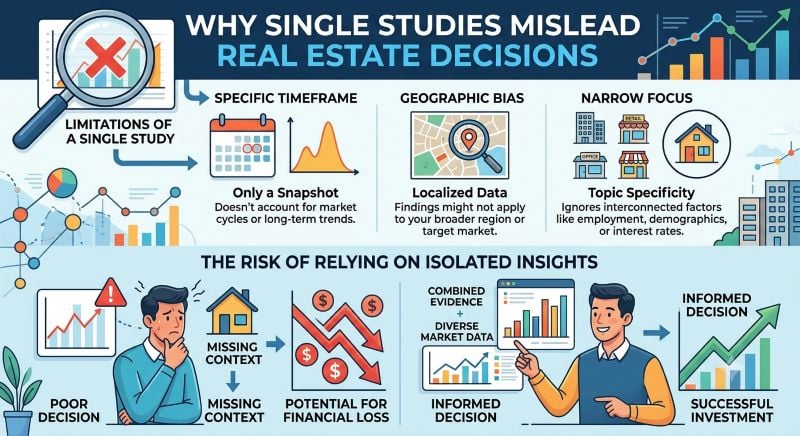
A single study, however well run, is a snapshot. It captures one market, one time period, and one sample, and its result can be a fluke or a quirk of local conditions. Real estate is full of single studies that point in opposite directions: one finds a feature lifts prices, another finds no effect at all. Picking the study you like is easy. Knowing which body of evidence to trust is the harder and far more valuable skill.
What a systematic review actually is
A systematic review answers one precise question by finding all the relevant studies, not just the convenient ones, and assessing them against rules fixed in advance. The reviewers write a protocol before they begin, search multiple databases, screen every result against clear criteria, and judge the quality of each study before drawing any conclusion. The goal is reproducibility: another team following the same steps should reach the same answer. That discipline is what separates a systematic review from a persuasive opinion piece.
From a pile of studies to one answer
When the studies are similar enough, reviewers combine their results statistically in a meta-analysis. Rather than counting how many studies agree, a meta-analysis weights each one by its size and reliability and produces a single pooled estimate, along with an honest measure of how much the studies disagree. A small study and a large one no longer carry equal weight. This is how researchers turn a noisy literature into a defensible number, and why a systematic review and its meta-analysis sit at the top of the evidence hierarchy.
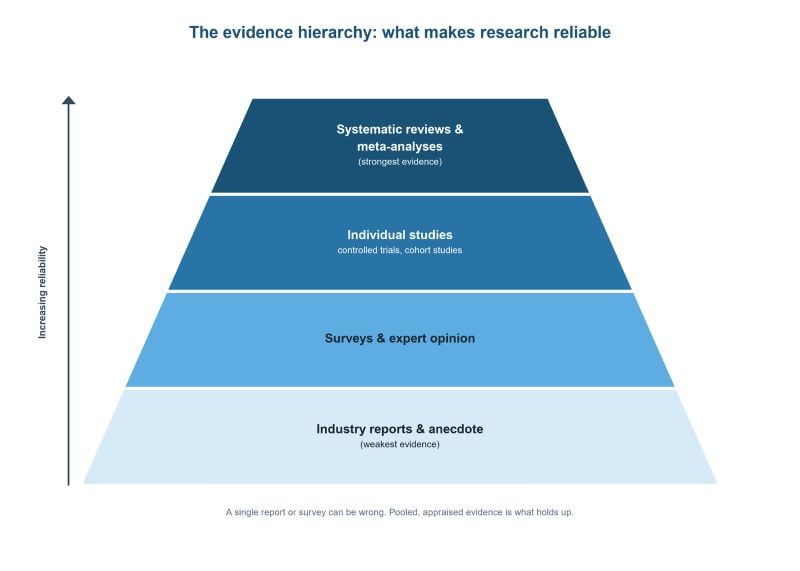
Image: Research Gold
Figure: not all research carries equal weight; systematic reviews and meta-analyses sit above single studies, surveys, and industry reports.
The questions this method helps settle
Plenty of property debates are better answered by a review than a headline. Does an energy-efficiency rating actually raise a home's sale price? Does proximity to transit or green space lift values, and by how much? Do short-term rentals push up local rents? Each of these has been studied many times, in different cities, with mixed results, which is exactly the situation a systematic review exists to resolve. The pooled answer is far more useful to a buyer, seller, or policymaker than any single market's snapshot.
How research teams build these reviews
Producing a review like this is painstaking work. Specialists who evaluate evidence for a living, such as the team at Research Gold, spend most of their effort on the unglamorous steps: defining the question, searching exhaustively, screening hundreds of records, and appraising the risk of bias in each study before anything is pooled. The credibility of the final answer rests on that hidden labour, not on the headline it eventually produces.
How to tell if a claim rests on systematic evidence
You do not need to run a review to benefit from one. Put a few questions to any property statistic. Does it draw on many studies or just one? Was there a stated method, or only a conclusion? Has the finding held up across different markets and time periods? Does the source acknowledge where studies disagree? A claim built on a systematic review tends to welcome those questions, while a claim built on a single convenient study tends to avoid them.
Why this rigor is worth your attention
In a market where one decision can be worth more than a year's salary, the gap between strong evidence and a confident guess is a gap worth noticing. Systematic reviews are not the flashiest research, but they are among the most honest, because they show their work and admit their limits. When the numbers behind a property decision come from that kind of evidence, you can act on them with far more confidence.