Monday Morning Quarterback

Written by Lloyd Segal Posted On Monday, 19 February 2024 00:00
Print | Email
  • State: Alabama
  • SOLD: 2
 

Monday Morning Quarterback

(Monday, February 19, 2024)

Zillow recently made a big change to its home price forecast. Now it’s predicting that U.S. home prices will rise this year, with an increase of 3.5% between December 2023 and December 2024. If that prediction comes to fruition, it would mean that national home prices in 2024 would see almost identical home price growth as 2023, which was 3.2%. With the exception of San Francisco and several housing markets in Louisiana, Zillow expects prices to rise across the board this year. The map below shows Zillow’s regional home price forecast for the nation’s 400 largest markets. This is a pretty big forecast revision. Back in November 2023, Zillow shifted its forecast downward, publishing a 12-month forecast predicting that U.S. home prices would fall -0.1% between October 2023 and October 2024. The image below shows Zillow’s 12-month regional home price outlook released in November [on the left] next to its 12-month outlook released this month [on the right]. Why such a significant upward revision? Just as Zillow's forecast model became more bearish in the fall when the average 30-year fixed mortgage soared over 7.5%, it has now reversed and become a bit more bullish as the average 30-year fixed-rate mortgage has fallen back under 7% (see story below). That shift in financial markets/mortgage rates may have influenced the model.  In other real estate news, let’s get under the hood…

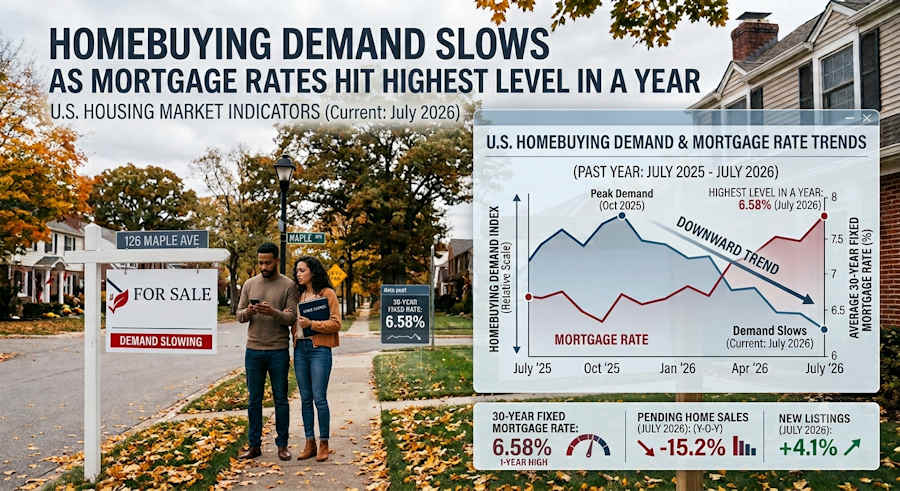
Mortgage Rates Rise To Highest Level In 2024. Mortgage rates are inching up after reports of hotter-than-expected inflation data showed continued strength in the U.S. economy. With inflation still over its 2% target (alongside a robust job market), the market is anxious about when the Fed will start cutting its benchmark interest rate, which is currently keeping mortgage rates elevated. The 30-year fixed-rate mortgage averaged 6.77% as of Feb. 15, according to data released by Freddie Mac last week. That’s up 13 basis points from the previous week. One basis point is equal to one hundredth of a percentage point. Mortgage rates were last at this level in mid-December, when rates fell below 7% for the first time since August. A year ago, the 30-year mortgage rate was averaging 6.32%. As of Feb. 15, the average rate on the 15-year mortgage was 6.12%, up from 5.9% last week. The 15-year rate was at 5.51% a year ago. Freddie Mac’s weekly report on mortgage rates is based on thousands of applications received from lenders across the country that are submitted to Freddie Mac when a borrower applies for a mortgage. Separate data from Mortgage News Daily showed the 30-year fixed-rate mortgage averaging 7.03% as of last week. What Freddie Mac says: “The economy has been performing well so far this year and rates may stay higher for longer, potentially slowing the spring homebuying season,” Sam Khater, chief economist at Freddie Mac, said in a statement. “According to our data, mortgage applications to buy a home so far in 2024 are down in more than half of all states compared to a year earlier,” he added. “Mortgage rates have been volatile due to strong employment data, rising last week and leading to a 2% drop in applications,” Bob Broeksmit, president and CEO of the Mortgage Bankers Association, said in a statement. 


How Americans Surfed Zillow in 2023. After analyzing more than 250 billion search queries, Zillow® has compiled the top search terms for 2023, showing the wide range of desires and preferences among America's home shoppers. Earlier this year, Zillow introduced an Al-powered natural language search feature that lets home shoppers search for homes in a conversational way, similar to how they talk to family or friends. This search data provides a unique glimpse into what Americans were searching for in a home this year. From practical needs like a garage to sought-after amenities such as backyard retreats, pools and fireplaces, these preferences showcase a variety of both modern and classic housing desires:

1.   Garage: Practical and convenient storage for vehicles.

2.   Backyard: A private outdoor retreat.

3.   Fireplace: A feature offering warmth and coziness.

4.   Walk-in closet: Space and organization for storage.

5.   Patio: An extension of indoor living for outdoor relaxation.

6.   Open floor plan: Modern, interconnected living spaces.

7.   Pool: A luxury, especially in warmer areas.

8.   Family room: Space for shared moments.

9.   Basement: Versatile extra space for various uses.

10. Granite counters: Durable elegance in kitchens and bathrooms.

Here's What Angelenos Googled the Most Last Year. Google’s 2023 Year in Search proves very telling for our city. Collecting data about people’s questions can tell a lot about a city’s personality, from priorities to regional issues. Common elements in Los Angeles included environmental concerns and Mexican music and sports. Here’s a look at what our city was curious about this year, according to the world’s biggest search engine. Television Shows. What shows are watched in the capital of the global entertainment industry?

  1. The Last of Us
  2. Beef
  3. The Glory
  4. Daisy Jones & The Six
  5. The Golden Bachelor

Near Me. Angelenos have their eyes on the weather but have to get them checked too. And, though Texas has the most pawn shops in the country, it seems like L.A. is looking to get some quick cash to spend on poke bowls:

  1. Air quality near me
  2. Earthquake near me
  3. Pawn shop near me
  4. Poke bowl near me
  5. Optometrist near me


Average Life Expectancies Have Doubled Over the Past 70 Years. Look in the mirror. Do you feel your age? Of course not. Everyone looks and feels younger than they are. But why is that? It would be hard to overstate the impact of medical and public health innovations over the last 200 years. Back in 1800, nowhere in the world had a life expectancy above age 40. In 1900, wealthy nations were faring better, but the global average life expectancy was still around 32. By 2021, however, the global average life expectancy had more than doubled to 71. How did this happen? For starters, it’s important to note that life expectancy has already been fairly high in wealthy countries for decades. In 1950, developed nations like the U.S. and Canada, most of Western Europe, and Japan all had life expectancies above 60. The entire continent of Africa, meanwhile, had an average life expectancy of 36. What has increased the global life expectancy so significantly has also been shrinking this gap. Poverty reduction and medical advancements have played key roles in this progress. Globally, we’re in an era of plenty: more people than ever before have access to quality food, clean water, antibiotics, vaccines, and other life-saving items. Public health efforts have supported better sanitation in developing nations, and extreme poverty levels have drastically declined. All of this has meant both significantly lower infant mortality rates and a higher life expectancy at every age after that worldwide. Of course, life expectancy still varies considerably. For one, women tend to live longer than men across the board, though the differential varies from country to country. The data seems to suggest that women are more likely to survive at every stage: newborn girls are less susceptible to viruses and genetic disorders than newborn boys; adult women are much less likely to die from “external causes of death,” like accidents and violence; and in old age, they don’t get sick or die from their illnesses as often as men do (likely due to less risky lifelong health behaviors). 


Ten Most Expensive Zip Codes in the United States. Depending on who you are, living in one of the most expensive zip codes in the United States is either wholly aspirational or a something you’d like to avoid at all costs. No matter which camp you fall into, you still must know which locales top the list. To that end, Zillow uncovered the priciest real estate markets across the country. The results are based on data from December 2023 analyzed with the Zillow Home Value Index, which the company uses to determine the typical home value in a given geography, now and over time. Curious which cities found their ways onto the list? Below, dive into the most expensive zip codes in the United States in reverse order:

10. Zip Code: 81656 (Woody Creek, Colorado). The typical home value in Woody Creak, Colorado, is $4,336,373, making it the 10th most expensive zip code in the country. In the 2020 census, the population of the costly enclave near Aspen was just 290. The area is a favorite for celebrities and has reportedly been home for people such as Don Henley of the Eagles, John Oates, and Don Johnson.

9. Zip Code: 31561 (Brunswick, Georgia). Homes along in the Atlantic Coast in the Golden Isles of Georgia don’t come cheap: The typical home value in the area is $4,365,388 according to Zillow data. The pricey area code encompasses properties on Little St. Simons Island, Sea Island, and St. Simons Island.

8. Zip Code: 11976 (Water Mill, New York). One might guess that New York City would top the list of most expensive zip codes in the country, but only two cities in the Empire State broke the top ten, the first of which is located out east in Water Mill, New York. Part of the town of Southhampton, the standard home value is $4,372,420. The community dates back to the 1640s and is now known for its beaches, farms, and mansions. Many celebrities have lived in the town including Jennifer Lopez and Richard Gere.

7. Zip Code: 92657 (Newport Beach, California). Fans of The O.C. may find it unsurprising that Newport Beach, the home of the fictional well-off Cohen family, is among the priciest places to live in the United States. The coastal city, where the typical home value is $4,378,430, is known for its beaches, surf culture, and upscale shopping areas.

6. Zip Code: 94022 (Los Altos, California). With a typical home value of $4,495,775, Los Altos is the sixth most expensive zip code in the United States. Located in Santa Clara County within the San Francisco Bay Area, it’s a primarily residential community, where seven small retail districts serve the town.

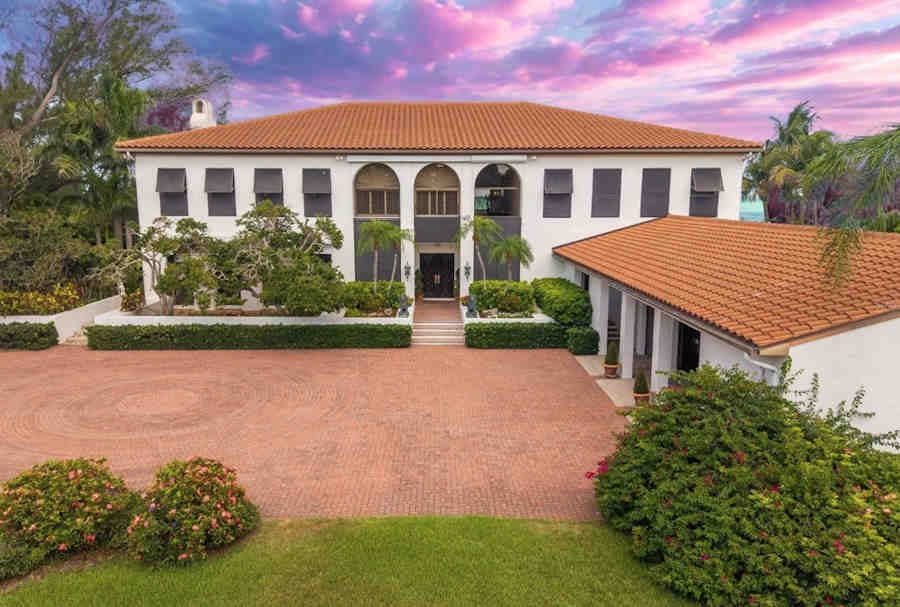
5. Zip Code: 93108 (Montecito, California). Montecito is known as a celebrity enclave, so it’s not all too surprising that the town would be among the priciest places to live. Home to stars like Gwenyth Paltrow, Meghan Merkle and Price Harry, the area is defined by Spanish style architecture—homes with terra-cotta clay tile roofs and soft arches cut out of white stucco walls. Here, the typical home value is $4,503,435.

4. Zip Code: 11962 (Sagaponack, New York). Like Water Mill, Sagaponack is also within the town of Southhampton. Though they’re just a few miles apart, the latter is quite a bit more expensive. Encompassing just 4.56 square miles, homes here are typically valued around $5,168,916. According to The Wall Street Journal, there are about 350 full-time residents in the community and more than 1,000 part-timers.

3. Zip Code: 90210 (Beverly Hills, California). Though 90210 is perhaps the most recognizable zip code in the country, it is only the third most expensive. The typical home value in Beverly Hills is $5,243,140, according to Zillow data. Rodeo Drive, Beverly Garden Park, and the Beverly Hills Hotel are among its most notable attractions, while iconic architecture, like the Sheats-Goldstein Residence is there too.

2. Zip Code: 33109 (Miami Beach, Florida). The second priciest real estate market is located at the southeastern tip of the country in Miami Beach, Florida. The zip code largely encompasses Fisher Island, a private enclave only accessible by ferry. Celebrities like Oprah, Mel Brooks and Boris Becker have reportedly owned homes here, where the typical home value is $5,675,294.

1. Zip Code: 94027 (Atherton, California). Located within San Mateo County in the Bay Area, Atherton is currently the most expensive zip code in the country, but the area is controversial. The town’s zoning laws allow only one single-family home per acre and no sidewalks, which many housing advocates say the locale uses to exclude and metaphorically gate the community.


Four New Emperor Penguin Groups Found In Antarctica. That brings the number of known nesting sites around Antarctica to 66. With the discoveries, scientists believe they now know the whereabouts of all the world's remaining breeding pairs. It's vital information for conservationists monitoring a species that's under increasing pressure as a result of climate change. Why? Because emperors court, mate, lay and hatch eggs, and then bring up their young on the sea-ice connected to the coast - so-called “fast ice.” But this type of ice has diminished in parts of Antarctica and become more variable, certainly in recent years, putting a big question mark against the long-term viability of the species in an ever-warming world. Emperors are the largest species of penguin, standing at over 1m tall. They live in extreme conditions, collecting together during the height of the Antarctic winter to breed in distinct groupings. These colonies tend to be separated from each other by an average of about 250km (150 miles). Scientists have been using satellites to search the gaps in this spacing for birds they didn't know about - and think all significant colonies have now been identified. The four new sites are welcome news, even though they add just a few thousand extra individuals to what's estimated to be an overall population of about 550,000 penguins. "It's good that even as emperors are being affected by changing ice conditions, we're still finding colonies," said Dr Peter Fretwell from the British Antarctic Survey (BAS). "But it's also clear these birds are going to have to be adaptable, to move around to new sites as those ice conditions continue to change” he told BBC News. In case you were wondering (and I know you were), the colonies are traced by the staining their guano ("poo") leaves on the white ice. If the birds are gathered in large enough numbers, this staining will be visible even from space. 


"Fixing and Flipping in 2024." Join us on March 14, 2024, as Jeremy Ruben will be visiting us from the central coast. Jeremy is a veteran flipper who will discuss the current state of the flipping business in Southern California. Join us as Jeremy shows us the how to fix and flip in 2024. Thursday night, March 14, 2024, Iman Cultural Center, 3376 Motor Avenue (between National and Palms), Los Angeles, CA 90034. FREE Admission. Metered and free street parking. Please RSVP at www.LARealEstateInvestors.com.


Vendors Expo Returns! Our world-famous, super-duper "Vendors Expo" returns on Thursday night, March 14, 2024. The Vendor Expo opens starting at 6:30 pm. We'll have 30+ of the finest vendors featuring real estate products and services you will want to utilize as a successful investor. Stick around after and enjoy our guest speaker. Iman Cultural Center, 3376 Motor Avenue (between National and Palms), Los Angeles, CA 90034. FREE Admission. Metered and free street parking. Please RSVP at www.LARealEstateInvestors.com.


This Week. Investors will continue to watch for Fed officials to elaborate on their plans for future monetary policy, especially if and when they will reduce interest rates. Other than that, it will be an extremely light week for economic reports. Existing Home Sales will be released on Thursday. The minutes from the January 31 Fed meeting will come out on Wednesday.

Weekly Changes:

10-Year Treasuries:             Rose  020 bps

Dow Jones Average:           Fell    100 points

NASDAQ:                            Fell    200 points

Calendar:

Wednesday (2/21):             Fed Minutes

Thursday (2/22):                  Existing Home Sales

Thursday (2/22):                  Jobless Claims

For further information, comments, and questions:

Lloyd Segal

President

Los Angeles County Real Estate Investors Association, LLC

www.LARealEstateInvestors.com

This email address is being protected from spambots. You need JavaScript enabled to view it.

310-409-8310


Rate this item
(0 votes)
Post to Social Media: Facebook X X X

Realty Times

Realty Times provides comprehensive resources for consumers navigating the real estate market, featuring expert guidance on home renovation, do-it-yourself projects, and property maintenance. The platform delivers current information on mortgages, homeowners associations, insurance, and legal matters. With daily content updates, Realty Times® has established itself as an essential resource for real estate professionals and consumers alike.