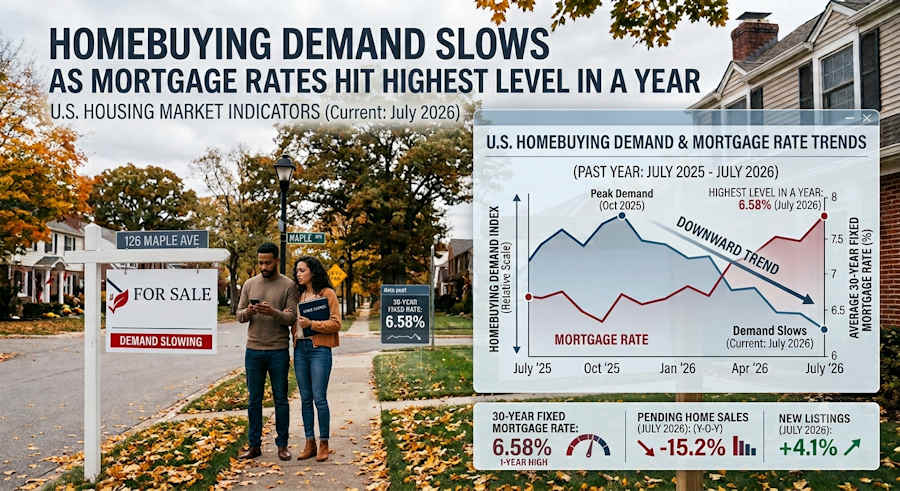
On July 6, Newsweek published a cover story warning that the southeastern United States was about to suffer a “maximum” housing bubble burst due to waning demand.
Opinion: As long as auto workers are not laid off due to overstocked new car inventory, today's market will not experience a housing bubble burst,
Indicator #1: New Car Absorption Rates
The absorption rate of new cars matters and is foundational to a stable economy. When car manufacturers start laying off workers, you can almost book it: housing sales will take a significant hit within six months or less. Thanks to a lack of new car sales, the housing industry started laying off workers. And when home builders lay off workers, those workers cannot buy new cars. You get the idea.
So, how is the auto industry doing today?
New car production is finally starting to normalize after post-pandemic years, according to Cars.com.
According to TD Economics, the automotive industry has emerged from the shadow of the pandemic and its accompanying supply chain disruptions, which weighed on it for over two years. Production activity has grown significantly as a result.
According to CarMax, there are five ways new car production benefits the economy.
1. Manufacturing Jobs: As car production ramps up, manufacturers hire more workers for assembly lines, quality control, and logistics. These jobs provide employment opportunities and contribute to local economies.
2. Supply Chain Impact: Expanding production requires raw materials, components, and services. This stimulates other industries, creating jobs in steel mills, electronics manufacturing, and transportation.
3. Dealer Network: A thriving automotive industry that supports dealerships, service centers, and sales teams. These roles directly depend on car sales and maintenance.
4. Supporting Roles: Beyond manufacturing, jobs emerge in marketing, design, finance, and administration. Engineers, designers, and marketers contribute to the industry’s growth.
5. Multiplier Effect: When workers earn income, they spend it on goods and services, further stimulating local businesses and creating additional jobs. In summary, robust car production can positively impact employment and economic vitality.
Indicator #2 New Homes Inventory
Home builders are facing challenges now with standing inventory. “When a new home is constructed, it has a significant impact on job creation. According to the National Association of Home Builders (NAHB), building 100 single-family homes generates approximately 300 year-long jobs.
“This positive cycle occurs because more jobs lead to increased worker income, which in turn drives household formation and the need for more homes. Interestingly, about half of the jobs created during home construction are in non-construction fields, demonstrating the broader impact on the economy", says the NAHB.
Hopefully, they will see reduced interest rates and better absorption rates soon enough to avoid costly layoffs.
According to Realty Times, more than 50% of resale shoppers are considering new construction, for the following three reasons:
1. They cannot find a resale they like enough to buy or renovate.
2. They make lowball offers for resales that get rejected
3. They find homebuilders in many markets are offering incentives and mortgage rates that can't be beat
Zillow just announced a fourth reason resale shoppers are turning to new construction.
According to Zillow, new homes are now cheaper by the foot than resales as new construction homes adapt to affordability challenges, they offer a renewed value proposition.
In fact, resale shoppers are becoming the specific target of homebuilder digital marketing strategies.
According to Matt Brown, Vice President of Sales and Marketing for ABD Developers, home builders, and developers of Providence, the popular master-planned development is 20 minutes from Walt Disney World in the Orlando area.
“The market has slowed, for certain. Thankfully, our co-broker network is strong, and our incentive package includes buy-down mortgage rates. We will do what we must do to keep our construction process intact," Brown said, "including, as many builders are doing, offering to buy down mortgage rates."
Indicator #3: Refinance Applications
Refinancing activity has recently surged, and many homeowners are considering it as mortgage rates have fallen. According to the Mortgage Bankers Association (MBA), applications have reached a two-year high, with demand up 37% compared to a year ago.
Do not be surprised if refinancing plays a bigger role in limiting inventory supply than expected.
Indicator #4: Renters are Moving out of Leases
According to Zillow, in a stable housing market, the percentage of renters who purchase a home remains consistent. Despite the unprecedented events of the last few years, this number has remained flat. In 2023, approximately 73% of renters considered buying when they were looking for a home to rent.
When renters start buying, look for home builders to reach out via direct mail campaigns offering lease buyouts as part of their incentive packages. The percentage of renters who eventually purchase remains to be seen, but those who can qualify and want to own a home are out there.
Summary:
According to NAR, the new home industry is in a relatively strong position. Here are some key points:
Growth in Construction: New-home construction is expected to grow in 2024, with builders ramping up efforts to meet the demand from buyers frustrated by the lack of existing inventory. Single-family housing starts are forecast to increase by 4.7% this year.
Increased Demand: There is a growing demand for new homes, partly due to the shortage of existing homes on the market. This trend is encouraging builders to offer more incentives, such as mortgage rate buydowns and assistance with closing costs, to attract buyers.
Economic Factors: While mortgage rates remain a challenge, they are expected to gradually decline, which could further boost the new home market.
A maximum housing bubble burst in the southeast? Not likely.